Pipeline integrity in upstream operations: where engineering software earns its keep
When an inspection finds corrosion or a dent, operators need a quick, defensible answer: can the line keep operating safely? Here is how integrity software supports that decision.
CDSS Editorial Team2 min readInsights
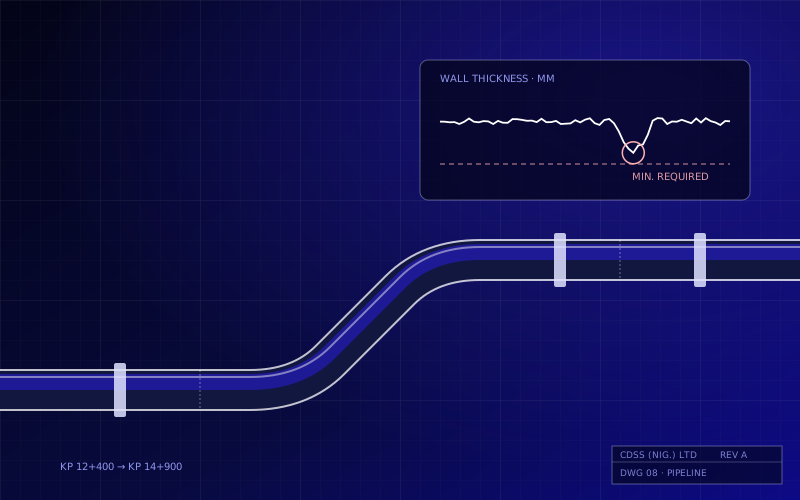
Pipelines are among the most valuable assets an oil & gas operator owns, and among the hardest to inspect and maintain. When an inspection run finds wall loss, a dent or a crack-like feature, the engineering team has to answer quickly and defensibly: is the line fit to keep operating, and for how long?
Ageing assets, higher stakes
Many pipelines run in harsh conditions, including humid coastal environments, swamp crossings, offshore risers and produced fluids that can be corrosive. Over time, wall loss and mechanical damage build up. A failure can cost far more than lost production, with safety, environmental and reputational consequences as well.
That is why integrity management has become a discipline in its own right. It depends on consistent, repeatable engineering calculations.
Fitness-for-service assessment
Fitness-for-service (FFS) assessment checks whether a pipeline with a known defect can keep operating at its current pressure, needs to be de-rated, or must be repaired. Engineers use recognised methods such as ASME B31G for corroded pipelines. They assess each defect using its measured dimensions, the pipe properties and the operating conditions.
Doing this by hand or in unmanaged spreadsheets is slow and error-prone, especially when an inline inspection reports hundreds of features. Dedicated integrity software applies the methods consistently and documents every assumption.
Corrosion evaluation and remaining life
A single inspection gives a snapshot. Comparing inspections over time shows the corrosion rate, and that makes it possible to estimate remaining life and plan the next inspection or repair before a defect becomes critical. Integrity software helps turn inspection data into a maintenance plan with clear priorities.
Standardised design calculations
Integrity starts at design. Wall thickness selection, pressure ratings and crossing designs all set the margins an operator will depend on for decades. Standard calculation tools help different engineers and contractors produce consistent results across a portfolio of projects.
Connecting integrity to design and analysis
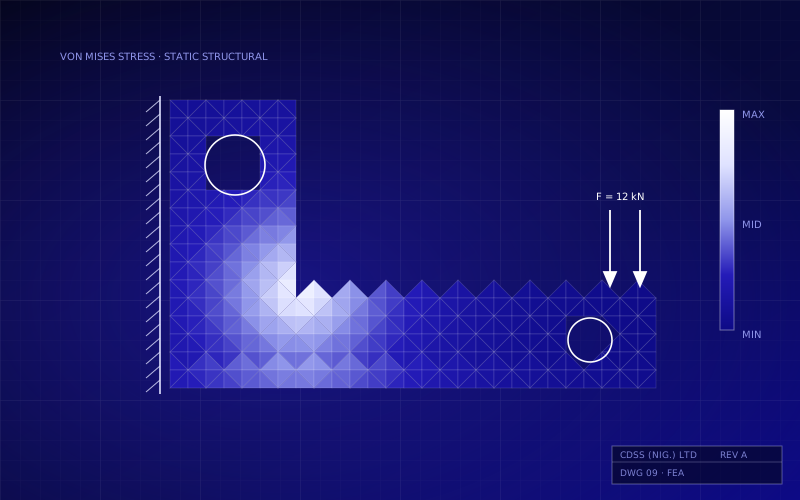
Pipeline integrity work rarely happens on its own. Piping stress analysis in AutoPIPE, detailed finite element analysis in ANSYS and plant models in OpenPlant all feed into, or depend on, integrity decisions. When these tools come from one partner that also supports them, teams spend less time sorting out licensing and more time on the engineering.
Training the people behind the numbers
Software is only as reliable as the engineer using it. Technical Toolboxes pairs its pipeline engineering software with industry-standard training, and CDSS delivers that training locally alongside ongoing technical support. That way, engineers understand the methods behind each result as well as the buttons.
Pipeline engineering tools, supported locally
CDSS supplies and supports Technical Toolboxes' pipeline integrity, corrosion and design software for Nigeria's upstream and midstream sector. Explore Technical Toolboxes.
Oil & GasTechnical ToolboxesPipelines
CDSS Editorial Team
Engineers and specialists at CDSS (Nig.) Limited, Nigeria's first CADD technology company since 1989.